Understanding Earthquakes
Between the years 2000 and 2011, earthquakes have killed the most amount of people compared to any other natural disaster1.
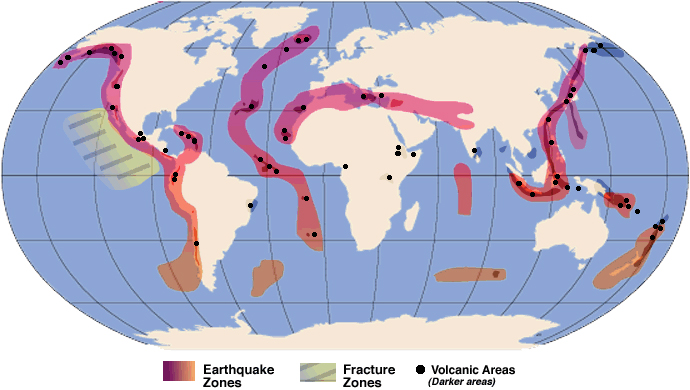
Due to the size of earthquakes a large geographical area is affected.
The economic losses from natural disasters since 2000 have been estimated to be in the range of $2.5 trillion dollars, and a large portion of that total has been accumulated from earthquakes5. The 2010 Haiti earthquake alone generated $9 billion dollars worth of public and private donations, however criticisms have emerged questioning where all the money was spent6.
In the aftermath of a natural disaster such as an earthquake, the top priority for local and international government officials is to secure the well being of the surviving victims, search for and rescue any missing survivors, and gradually begin the rebuilding process. This type of rapid response requires a cheap, reusable, fast to deploy, temporary and long term shelter for the surviving victims of these earthquakes.
Learning From The Past // 2008 Sichuan Earthquake, China
On Monday, 12th of May 2008 in Sichuan province, China, a magnitude 7.9 earthquake occurred in the early hours of the morning7. The earthquake killed 69,197 people and left 18,222 people missing8.

Sichuan province is located in southwest China. With a population of 81 million people (2013).
The earthquake was felt in nearby countries and in both Beijing and Shanghai, approximately 1,500km and 1,700km away9.

Map of the earthquake range.
More than 4.8 million people were left homeless initially after the earthquake and were assigned to temporary shelters10. Since the quake more than $146.5 billion dollars have been spent rebuilding and restoring the damages caused by the earthquake11.


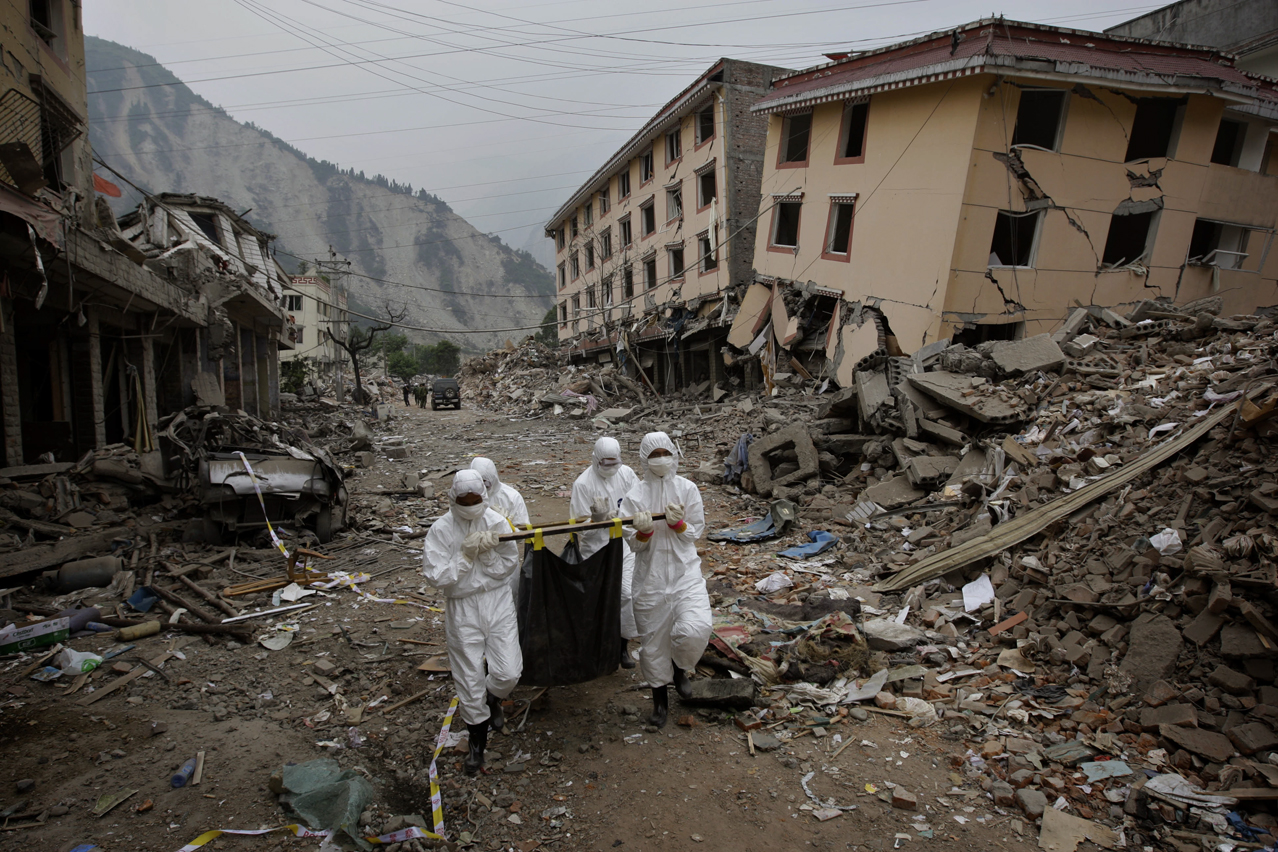
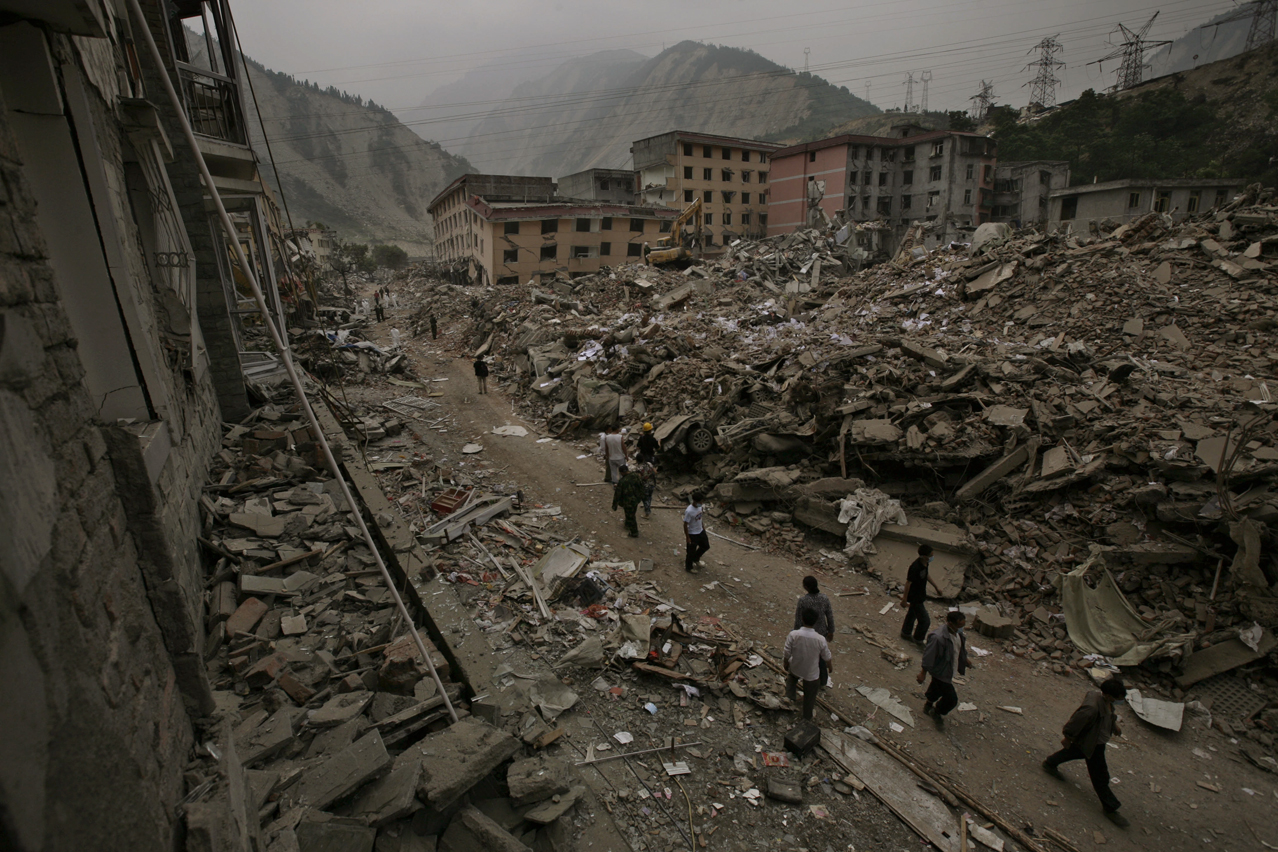
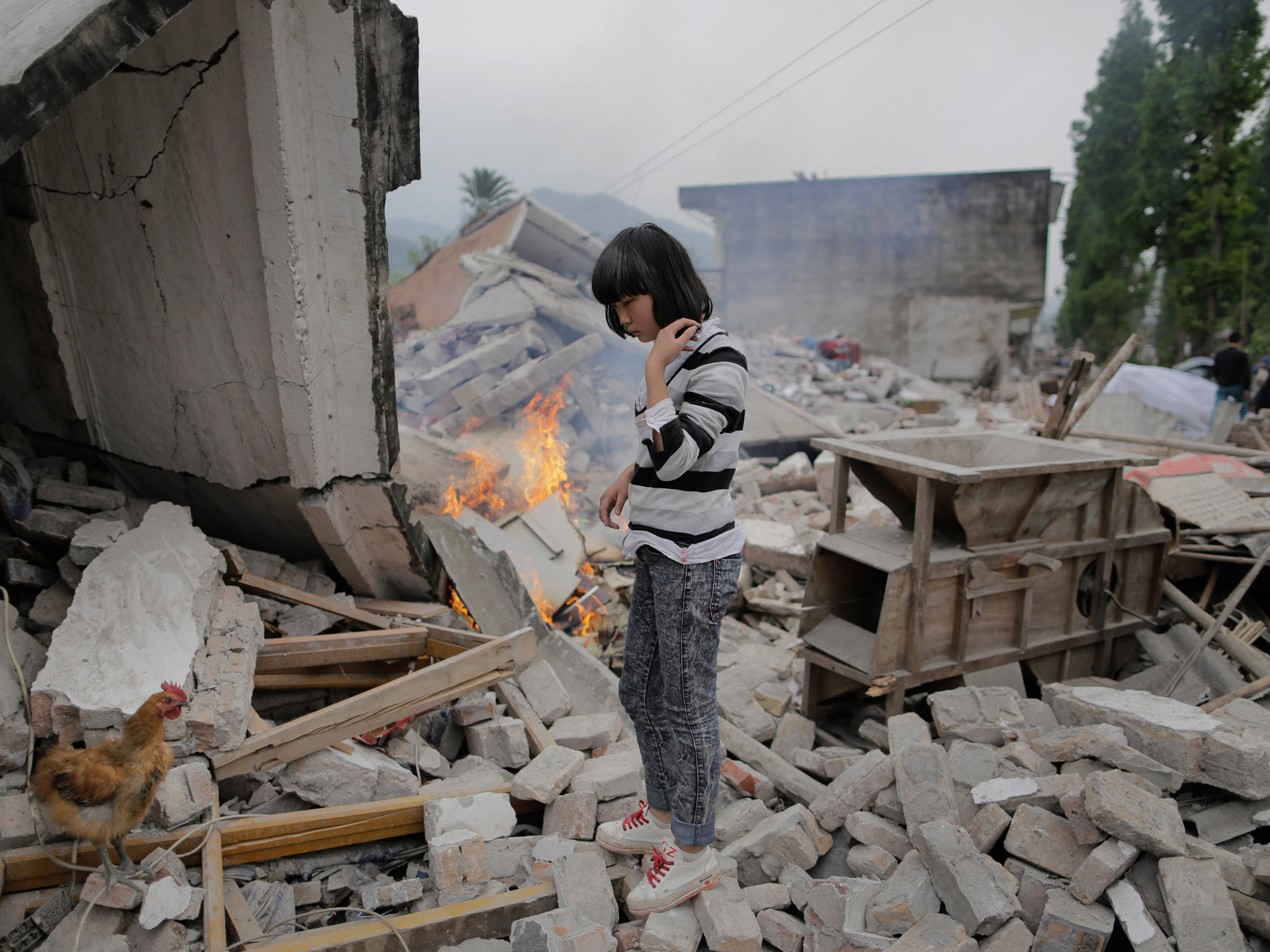
The earthquake destroyed many rural cities and towns, turning the concrete structures to rubble.
Precedent One: Royal Wolf’s Outdoor Room


A basic but very flexible use of a 20 foot container, the Outdoor Room made by Royal Wolf is a very utilitarian piece of architecture, providing and transforming into any small space that is needed. The large sliding doors on one length of the container also acts as windows and provides a large source of light.
Precedent Two: Casa Cubica


A cosy living space with all the necessary living requirements including kitchen and bathroom, the Casa Cubica provides a generous space to live. Extending on the original frame of the 20 foot container, the Casa Cubica has a covered outdoor porch area, an extruded bathroom, and an extra bunk bed set up for more inhabitants. This design has shown that shipping containers can be transformed into something that can have the quality of a home.
Comparisons
Similarities:
- Both designs can inhabit people.
- The entry to the interior is through the sidewall window doors.
- Both have utilized the original frame of the shipping container.
Differences:
- Casa Cubica has a covered porch area and access to the top of the shipping container where there is a usable space.
- Casa Cubica has extended from the original shipping container frame, while the Outdoor Room has kept the original dimensions.
- The Outdoor Room only acts as a temporary utility space for work or accommodation, while the Casa Cubica can be more of a permanent retreat or holiday home.
Designing From Comparisons
To design accommodation for an earthquake aftermath there are some aspects or guidelines it is important to follow or consider.
- The design itself should not be a home for the people affected, rather a temporary shelter to stay until their original homes are restored or rebuilt.
- The overall cost of each unit should be very low and the design itself should not be very complex and require many man hours.
- If the design requires an extrusion from the original shipping container, the extrusions must be able to retract into the original dimension in order for the container to be shipped.
- The design should be reusable, easy to clean, easy to maintain and preserve for a long period of time.
- An earthquake specific design aspect is to not have any loose design features in case of aftershocks in the earthquake zone.
- Home is more than just a private and personal space, it contains the essence of community.
"In English, the term 'home' derives from the Anglo-Saxon word ham, meaning village, estate or town (Hollander, 1991)."
- Mallett, S. (2004). Understanding home: a critical review of the literature. The Sociological Review, 52(1), 62-89.
- The idea of Home is more than just a physical object, it contains philosophical ideas that define the human condition.
"Home is variously described as conflated with or related to house, family, haven, self, gender, and journeying."
- Mallett, S. (2004). Understanding home: a critical review of the literature. The Sociological Review, 52(1), 62-89.
- A Home provides both psychic and physical security.
"The concept of security includes both psychic security and physical security, or protection. Both forms of security are obtained in the home, and also in its individualized cores, usually bedrooms, boudoirs, or studies."
- Poreous, J. D. (1976). Home: The territorial core. Geographical Review, 66 (4), 383-390.

your site is more usefull ans easly use...
ReplyDeleteA basic but very flexible use of a 20 foot container, the Outdoor Room made by Royal Wolf is a very utilitarian piece of architecture,
Fancy designer wear and fashioable.......
Here We Have Some For You In Your Budget
For More.... Plz visit Plz visit:-
designer wear printed